
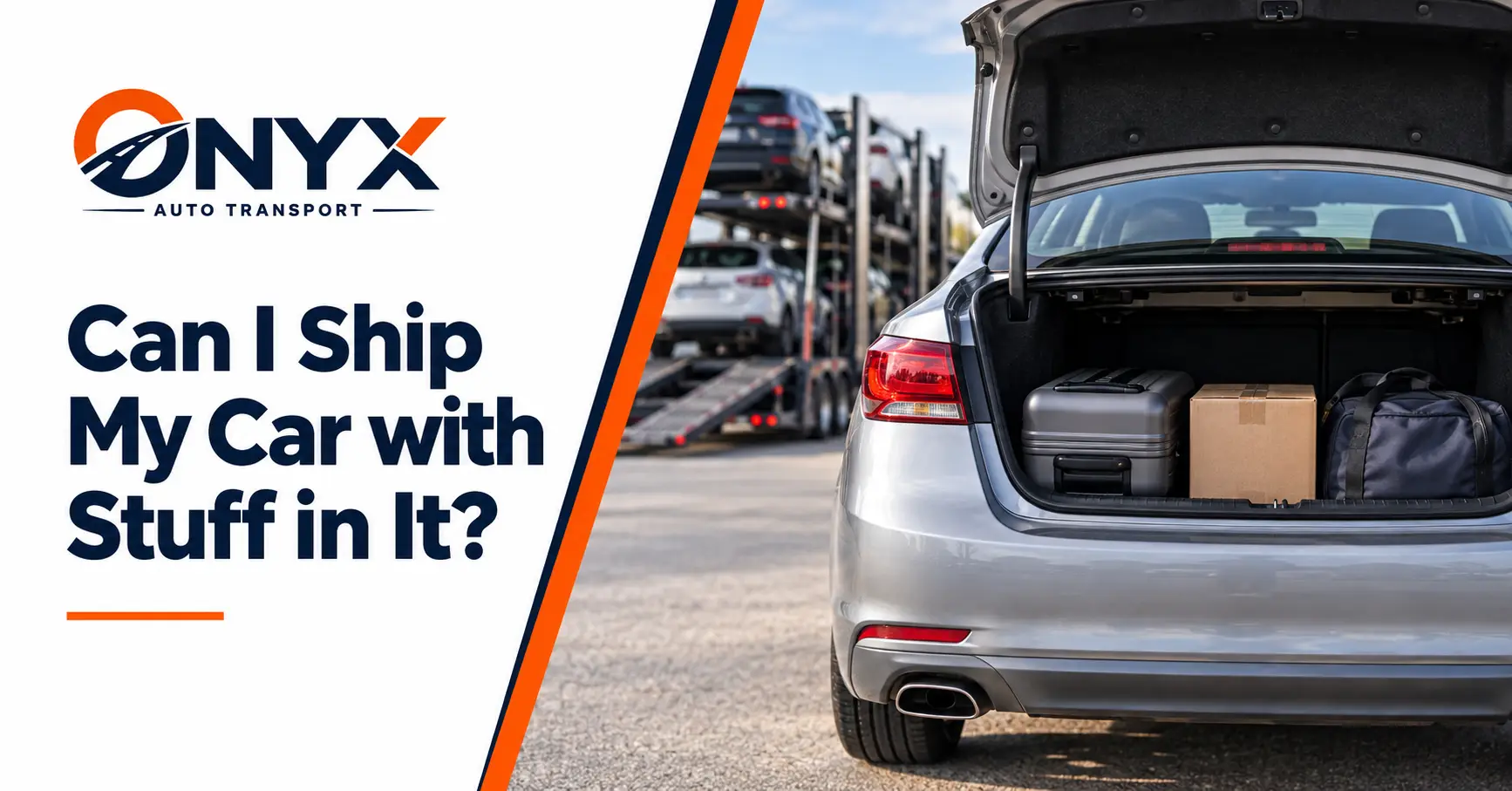

You’re already juggling a move, a new job, or a long-distance car purchase. The last thing you want is another box to pack or another trip to the shipping counter. So it’s a fair question: can you just toss some bags in the trunk and let the auto transport company handle it along with the car?
The short answer is yes, within limits. Here’s what those limits actually look like, why they exist, and how to pack your car the right way before it gets picked up. If you’re weighing your shipping options in general, Onyx Auto Transport’s how it works page is a good place to see the full process from quote to delivery before you get into the packing details.
Can I Ship My Car with Stuff Inside? The Short Answer
Most auto transport companies allow a small amount of personal items inside your vehicle during shipping, usually around 100 pounds. That’s roughly one to two duffel bags or a couple of boxes, not a full car full of belongings.
This isn’t a hard federal rule written into law. It’s more of an industry standard that most carriers follow, based on weight limits and safety practices. Some carriers stick closer to it than others, so it’s worth confirming the exact policy with whatever company you book, including asking directly before your pickup date. When you request a quote from Onyx Auto Transport, this is a good detail to mention up front so your dispatcher can flag it with the assigned carrier ahead of time.
Why This Question Comes Up So Often
There are many reasons why someone may want to know if they can ship their car with personal items. Perhaps you are in the process of moving. You may be looking to reduce how many boxes you have to load onto your moving truck. If you’re a parent perhaps your child is driving off to college and you wanted to throw some of their belongings in with them. Or maybe you just purchased your car from another state and it’s easier to have a bag packed for you.
There are a few factors that play into this question but most will give you the same answer. It all depends on how much weight your vehicle can hold and how far your insurance will cover you as well as what the shipping company allows.
How Much Stuff Can You Pack When You Ship a Car?
Here’s what most carriers expect if they allow personal items at all:
- Weight limit: Around 100 pounds total.
- Location: Trunk or rear cargo area only. Not the front seat, not the driver’s area.
- Height: Items should sit below the window line so the driver has a clear line of sight when loading and unloading.
- Security: Everything needs to be packed so it can’t shift or roll around during transport.
If you’re shipping an SUV or hatchback with a visible cargo area instead of a closed trunk, ask your transport company how that changes the rules, since visibility matters more in that setup. This applies whether you’re shipping locally or arranging cross-country car shipping over a longer distance, since weight limits on the trailer don’t change based on how far the truck is driving.
What You Can Pack vs. What You Can’t
Not everything is fair game. Here’s a general breakdown, though you should always confirm specifics with your carrier before pickup.
Usually allowed:
- Clothing in soft bags or duffels
- Bedding, towels, and linens
- Books
- Small, non-fragile boxed items
- Shoes and other lightweight personal gear
Usually not allowed:
- Electronics like laptops, tablets, or cameras
- Jewelry, cash, or important documents
- Firearms and ammunition
- Alcohol or flammable items
- Perishable food or plants
- Fragile or breakable items
The pattern here is pretty simple. Carriers avoid anything valuable, anything hazardous, and anything that could spoil, spill, or shift during a multi-day drive. This holds true whether you’re using open auto transport or a more protected option, since the restrictions are about weight and liability, not about which type of trailer your car rides on.
Why Auto Transport Companies Limit What You Pack
It’s not random. There are a few solid reasons carriers keep the rules tight.
Weight and Federal Regulations
Truckers that drive car carriers will be driving several cars at once on their trailers. There is a limit to how much your trailer can hold based on DOT laws. By adding more weight to your vehicles you could go over that limit. If a trucker is caught over weight while being inspected they can get fined. This is why the 100 lbs rule was put into place.
Insurance Doesn’t Cover Personal Belongings
This is the part people miss most often. The cargo insurance that protects your vehicle during transport does not extend to whatever is inside it. If a bag goes missing or an item gets damaged along the way, that loss typically isn’t covered under the carrier’s policy. Anything you pack, you’re packing at your own risk.
Theft and Liability
Transport trucks make stops. Drivers rest overnight in parking lots, truck stops, and open lots along their route. A car with visible boxes or bags inside is more noticeable, and that’s not a risk any driver wants to take on for someone else’s belongings. Keeping personal items out of sight, or out of the car entirely, lowers that risk for everyone involved.
Is My Stuff Insured During Shipping?
No you would not be covered under normal vehicle shipping. When you ship a vehicle the insurance only covers your vehicle. Any damage that may occur during transit such as dents and dings etc. Anything you have inside of your vehicle is most likely not going to be documented when shipping your vehicle. So there is no documentation of any personal property.
If you’re shipping anything you’d genuinely be upset to lose, it’s worth shipping it separately through a moving company or a parcel carrier instead of packing it in the car. This is especially worth thinking about if you’re using a relocation car service as part of a bigger move, since you’ll likely already have a moving company handling boxes and furniture separately anyway.
Tips for Packing Your Car Before Shipping
If you do plan to pack a small amount of items, here’s how to do it right:
- Weigh your bags before you pack them. A bathroom scale works fine. Staying under the weight limit avoids extra fees or a refused pickup.
- Use soft-sided bags, not hard suitcases or boxes with sharp edges. Soft items are less likely to cause interior damage if they shift.
- Keep everything in the trunk or cargo area. Nothing should sit in the front seat, the floorboards, or anywhere visible through the windows.
- Skip anything valuable, fragile, or perishable. If it can spoil, break, or get stolen, it doesn’t belong in the car.
- Tell your transport company what’s inside. Don’t assume it’s fine just because it’s under the weight limit. A quick heads-up before pickup avoids confusion on delivery day.
- Take photos of your packed trunk before pickup. It’s a small step that gives you a record of what went in, in case anything looks different on arrival.
If you’re shipping a car to or from a college campus, this same list applies to student car shipping too. It’s tempting to pack a laptop or a few valuables in with dorm essentials, but the same rules still apply, so plan to carry anything important with you instead.
Does Open or Enclosed Transport Change the Rules?
Not really. Whether you choose open auto transport or enclosed auto transport, the same general packing guidelines apply. Enclosed trailers protect the vehicle from weather and road debris, but they don’t change how personal items inside the car are insured or handled. The weight limit and trunk-only rule still apply either way.
There is one difference if you’re trying to ship a classic car. The company may not allow as many personal belongings in your car because they want to focus on shipping the vehicle and not extra items.
What Happens If You Pack Too Much?
If your car is packed with more than what the carrier stated. They can have you unload some of the contents from your vehicle. Which can ruin your day on pick up. Other carriers will just add on more to the price because your vehicle is over weighted. Or they will refuse to load your vehicle.
None of this is meant to be a hassle. It’s about keeping the load legal and safe for the driver hauling several vehicles at once. A quick call to your transport company before pickup, especially if you’re planning to pack more than a bag or two, saves everyone a headache. If you’re not sure how packed items might affect your total price, Onyx Auto Transport’s car shipping cost calculator is a useful starting point for estimating costs before you finalize your booking.
A Quick Word on Door-to-Door Pickup
Since most personal item questions come up around pickup day, it’s worth mentioning how that day actually works. With door-to-door car shipping, the driver comes as close to your home and destination as safely possible, which means you’ll typically be the one handing over the keys and walking through the car with the driver. That’s the moment to point out what’s packed in the trunk and confirm it matches what you discussed at booking.
Final Thoughts
So, can you ship your car with stuff in it? In most cases, yes, as long as you keep it light, keep it in the trunk, and skip anything valuable or hazardous. It’s a small convenience that can save you a separate shipping cost, as long as you follow the guidelines your carrier sets.
Onyx Auto Transport works with a nationwide network of vetted carriers and can walk you through what’s allowed for your specific vehicle and route before you book. You can learn more about the company on the who we are page if you want some background before requesting a quote.
Frequently Asked Questions
Can I put boxes in my car when I ship it?
Yes, usually up to about 100 pounds of soft bags or small boxes in the trunk or cargo area. Keep items below the window line and confirm the exact limit with your transport company before pickup.
Are my personal belongings insured during car shipping?
No. Cargo insurance covers the vehicle itself, not items inside it. If something is lost or damaged, you generally have no claim through the carrier’s insurance policy.
What items are not allowed when shipping a car?
Electronics, jewelry, cash, important documents, firearms, alcohol, perishable food, and fragile items are typically off-limits. Carriers avoid anything valuable, hazardous, or likely to spill or spoil.
Will I get charged extra for packing items in my car?
If you stay within the standard weight limit, most carriers don’t charge extra. Go over that limit, and you may face additional fees or have your pickup delayed until the excess weight is removed.
Does shipping with items inside slow down delivery?
No, packing a small amount of personal items doesn’t affect transit time. It only becomes an issue if the weight exceeds what your carrier agreed to at booking.