
If a contractor needs a part at their jobsite by the next day or if your local dealer needs to ship one car from one state to another they most likely won’t use a box truck or semi truck. They will probably be shipped via a hotshot trucking company. Hotshot trucking has grown over the years and is becoming more popular in the trucking world.
Below I will explain what hotshot trucking is and how a trip will go. We will go over equipment you’ll need, paperwork, cost and compare hotshot trucking to other shipping options. Including car shipping. If you’re looking to ship something or want to know more about hotshot trucking this will give you some insight.
What Is Hotshot Trucking?
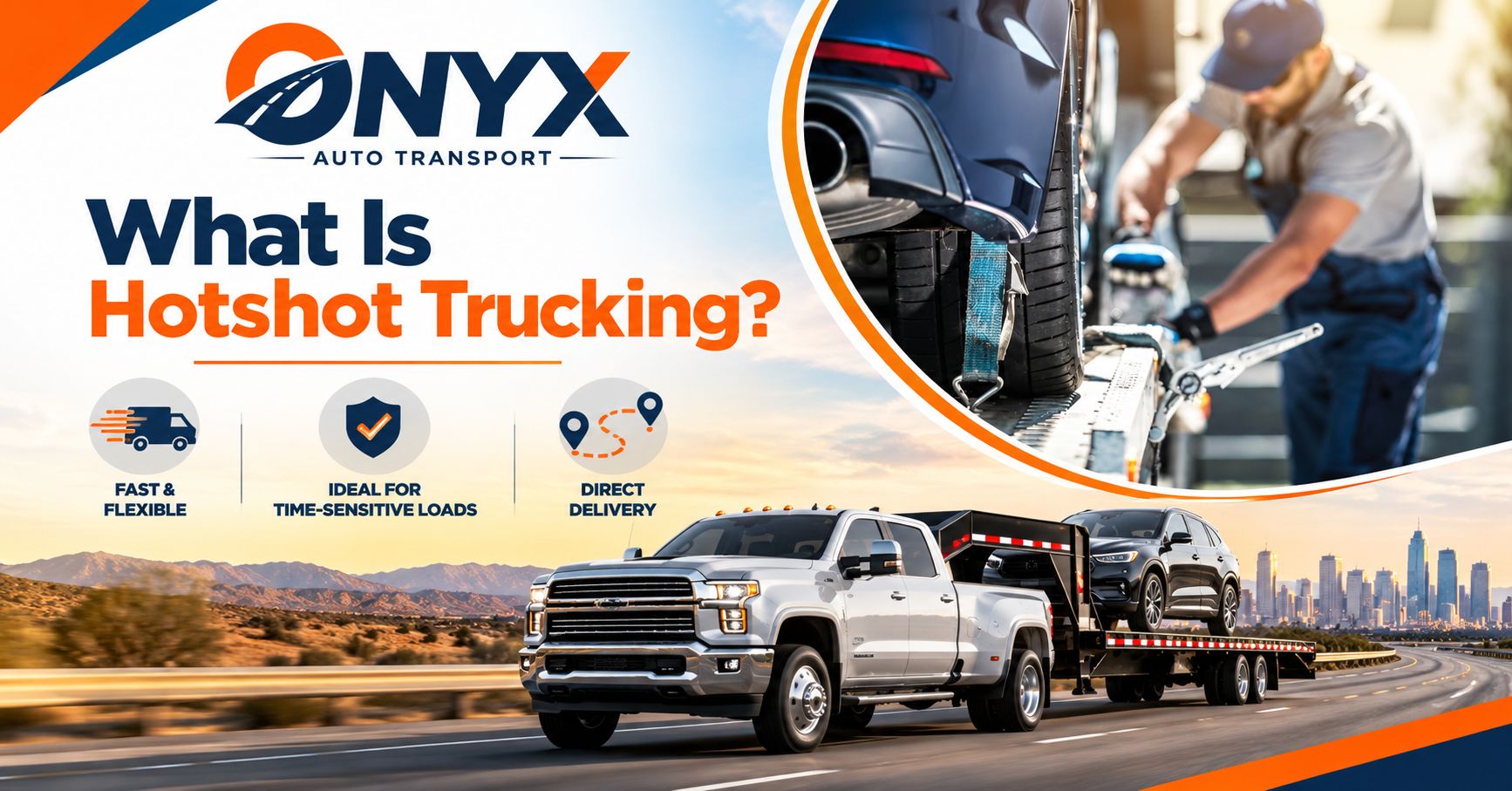
Hotshot trucking is when someone uses a 1 ton or bigger pickup truck with a flat bed or gooseneck trailer attached to it. Hotshot drivers take these types of loads because they want to haul freight without sitting around waiting on a big truck and full load of freight.
They haul “hot” loads that need to get somewhere as soon as possible. The amount of freight that a hotshot will typically haul is anywhere from a couple thousand lbs to 16,000 lbs. Which is too much for a normal pickup truck to haul.
These loads would be considered a partial load in the freight world. They allow hotshot drivers to run freight that wouldn’t normally be able to be run by smaller trucks or couriers.
How Hotshot Trucking Works
A hotshot job moves through a handful of simple steps.
- A shipper needs a load moved: This might be a business, a contractor, a dealership, or a freight broker working for one of them.
- The load is posted or booked: Many jobs are listed on load boards, which are online marketplaces where shippers and carriers connect. Some drivers also work with regular clients directly.
- The driver accepts the job: They confirm the pickup location, delivery location, weight, dimensions, and the rate.
- The freight is loaded and secured: The driver uses chains, straps, and binders to tie down the cargo on the trailer, following safety rules for load securement.
- The trip begins: Because there is only one truck and one driver, routes are usually direct, and delivery windows are tighter than with large carriers.
- The load is delivered and documented: The receiver signs a bill of lading, and the driver invoices for the job.
Because loads are small and routes are point to point, hotshot trucking can often move freight faster than traditional less-than-truckload shipping, which stops at multiple terminals.
Equipment Used in Hotshot Trucking
The Truck
Trucks used by hotshots will usually be some type of class 3,4 & 5 truck. Some trucks that people like to drive would be a ford f350/450 ram 3500/4500 or Chevy silverado 3500hd. Usually these trucks have dual rear wheels also known as a dually. Diesel engines are typically what you’ll find on these types of trucks.
The Trailer
Most hotshot trailers are flatbeds, typically 30 to 40 feet long, though some are shorter and some are longer. The two main hitch styles are:
- Gooseneck. The trailer attaches to a hitch in the truck bed, which improves weight distribution and handling, and is the common choice for heavier loads.
- Bumper pull. The trailer attaches to a hitch at the rear bumper. It is simpler and less costly but typically handles lighter loads.
Trailers are often fitted with ramps, winches, side rails, and tie-down points, depending on the type of freight.
Securement Gear
There has to be good tie downs to safely haul your load. Drivers will have ratchet straps, chains, load binders, edge guards and tarps. If your cargo moves while on the road it’s unsafe. The government sets a certain amount of tie downs that should be used for your load.
What Do Hotshot Trucks Haul?
One reason this niche has grown is the variety of freight it can handle. Common loads include:
- Construction materials such as lumber, pipe, steel, and rebar
- Heavy equipment and machinery, including skid steers, small excavators, and generators
- Oilfield and industrial parts that are urgent and needed on site quickly
- Agricultural equipment and supplies
- Vehicles and trailers, such as ATVs, boats, and sometimes cars
- Time-sensitive manufacturing parts that keep production lines running
Hotshot trucking is not suited to every cargo. Hazardous materials, very oversize loads, and freight that requires temperature control generally call for different equipment and permits.
Licensing, Authority, and Insurance Requirements
Rules depend on where you operate and what you haul, so anyone entering the business should verify current requirements with the Federal Motor Carrier Safety Administration (FMCSA) and their state transportation agency. In broad terms, the requirements include:
- A commercial driver’s license (CDL), in some cases. A CDL is generally required when the combined weight rating of the truck and trailer reaches 26,001 pounds or more and the trailer is rated above 10,000 pounds. Many hotshot operators stay below that threshold and operate without a CDL, but those who haul heavier loads need one.
- A USDOT number. Carriers operating commercial vehicles across state lines above the federal weight threshold usually need a USDOT number.
- Motor carrier (MC) authority. Drivers who haul freight for hire across state lines need operating authority.
- Insurance. Typically this means commercial auto liability and cargo coverage, and often more. Minimum liability amounts are set by federal rules, and many brokers and shippers require higher limits.
- Hours-of-service compliance. Drivers must follow federal limits on driving time and, in many cases, use an electronic logging device.
- Regular vehicle inspections. Commercial vehicles are expected to meet maintenance and safety standards and may be inspected at weigh stations.
- Intrastate rules. Operating only within one state may involve different requirements, so state rules always matter.
Hotshot Trucking vs. Traditional Freight
| Feature | Hotshot Trucking | Full-Size Semi (Tractor-Trailer) |
| Typical truck | Heavy-duty pickup | Class 8 tractor |
| Typical load size | Up to about 16,500 lbs | Up to about 45,000+ lbs |
| Trailer | 30–40 ft flatbed | 48–53 ft trailer |
| Best for | Partial, urgent, smaller loads | Large, full truckloads |
| Flexibility | Reaches tight sites and rural locations | Needs more space to maneuver |
| Startup cost | Lower | Higher |
Neither option is better in every case. Hotshot trucking focuses on speed and flexibility, while large semis focus on capacity.
How Much Does Hotshot Trucking Cost?
For Shippers
There will typically be a rate per mile or per load or a combination of both. Mileage rates can vary depending on how much diesel is costing and the availability of freight. Shorter loads will usually have a higher rate per mile then longer distances. Make sure to get your rate in writing and know what’s included and what’s not.
For Drivers Starting Out
Starting a hotshot business generally involves a truck, a trailer, insurance, authority fees, and operating expenses. The investment varies widely, depending on whether you buy new or used equipment, and the costs of fuel, maintenance, tires, and insurance continue every month. Anyone planning a start-up should build a realistic budget and consider talking to an accountant familiar with trucking.
Advantages of Hotshot Trucking
- Fast delivery. Smaller loads and direct routes can shorten transit times.
- Flexible scheduling. Drivers can often pick up on short notice.
- Access to tight or remote locations. A pickup truck can reach job sites that a large rig cannot.
- Lower entry cost than a full semi. Equipment and insurance are typically less expensive than for a Class 8 truck.
- Variety of work. Many types of freight fit on a flatbed.
Challenges and Risks
- Heavy competition. Entry is relatively easy, so rates can be pressured by many small carriers.
- Fuel and maintenance costs. Towing heavy loads is demanding on a truck.
- Compliance responsibilities. Safety rules, logs, and insurance apply even to smaller operations.
- Inconsistent income. Work can vary with the seasons and with demand in industries like construction and energy.
- Long hours. Meeting urgent deadlines often means irregular schedules.
Hotshot Trucking and Car Shipping: What’s the Difference?
Some people wonder if a hotshot trucker can do the same thing as auto transport because they can haul 1 or 2 vehicles on a trailer. While similar it’s not quite the same.
Cars hauling companies are equipped to haul vehicles. With the proper trailers and loading equipment. As well as insurance. Hot shot trailers are more of an all purpose trailer. It can hold one or maybe 2 vehicles. If you’re just moving one vehicle and it’s close you could get away with using a hot shot hauler. If you’re transporting longer distances or have multiple vehicles or even an expensive car you should look into an auto transport carrier.
Car Shipping Companies will be able to help you ship your car anywhere in the country. Companies like Onyx Auto Transport. They will help you understand if open or enclosed transport is right for your vehicle. If you are comparing ways to move a car, the team can help you understand what each option involves before you commit. You can read about enclosed auto transportation if you are shipping a classic, luxury, or collectible vehicle.
Tips for Choosing a Hotshot Carrier
If you are a shipper looking for a hotshot driver, a few checks go a long way.
- Verify authority and insurance. Ask for the USDOT number, MC number, and a current certificate of insurance.
- Check safety records. Federal databases list basic safety information for registered carriers.
- Confirm equipment suits your load. Ask about trailer length, weight rating, and securement gear.
- Get the quote in writing. Include pickup and delivery windows, fuel charges, and any fees.
- Ask about communication. Reliable drivers provide updates and tracking.
- Read reviews carefully. Look for patterns about timeliness and how problems were handled.
Is Hotshot Trucking Right for You?
Hotshot trucking is great for business owners if they need to haul something urgent or have a partial load or need to get to an area a big rig may not be able to. If your looking to drive this can be a good entry point into the world of trucking. Just make sure you have money planned out and are following trucking regulations.
If you only want to transport a car it’s best to use that service. Onyx Auto Transport and similar companies focus entirely on vehicle shipping, and you can learn more at Onyx Auto Transport.
Final Thoughts
Hotshot trucking allows you to move cargo that needs to get there quick and can’t fit on a courier. By using a heavy duty truck with a flat bed trailer and having proper tie down and license and insurance requirements. Shipper’s love hotshot because they can get their product to where they need it quicker and you can become one as well with less money. Its just all about what your comfortable with and knowing what your doing when it comes to hot shot trucking.
Frequently Asked Questions
- What is hotshot trucking in simple terms?
It is a freight service that uses a heavy-duty pickup and a flatbed trailer to deliver smaller, often urgent loads quickly. - Do you need a CDL for hotshot trucking?
Not always. A CDL is generally required only when the combined vehicle and trailer rating reaches 26,001 pounds or more with a trailer above 10,000 pounds. - How much weight can a hotshot trailer carry?
Most haul between a few thousand pounds and roughly 16,500 pounds, depending on the truck and trailer. - What is the difference between hotshot trucking and regular trucking?
Hotshot uses smaller trucks for partial or urgent loads, while regular trucking uses large tractor-trailers for full truckloads. - Can a hotshot truck ship a car?
Yes, sometimes for one or two vehicles. For longer or higher-value shipments, a dedicated auto transport carrier is typically a better option.