
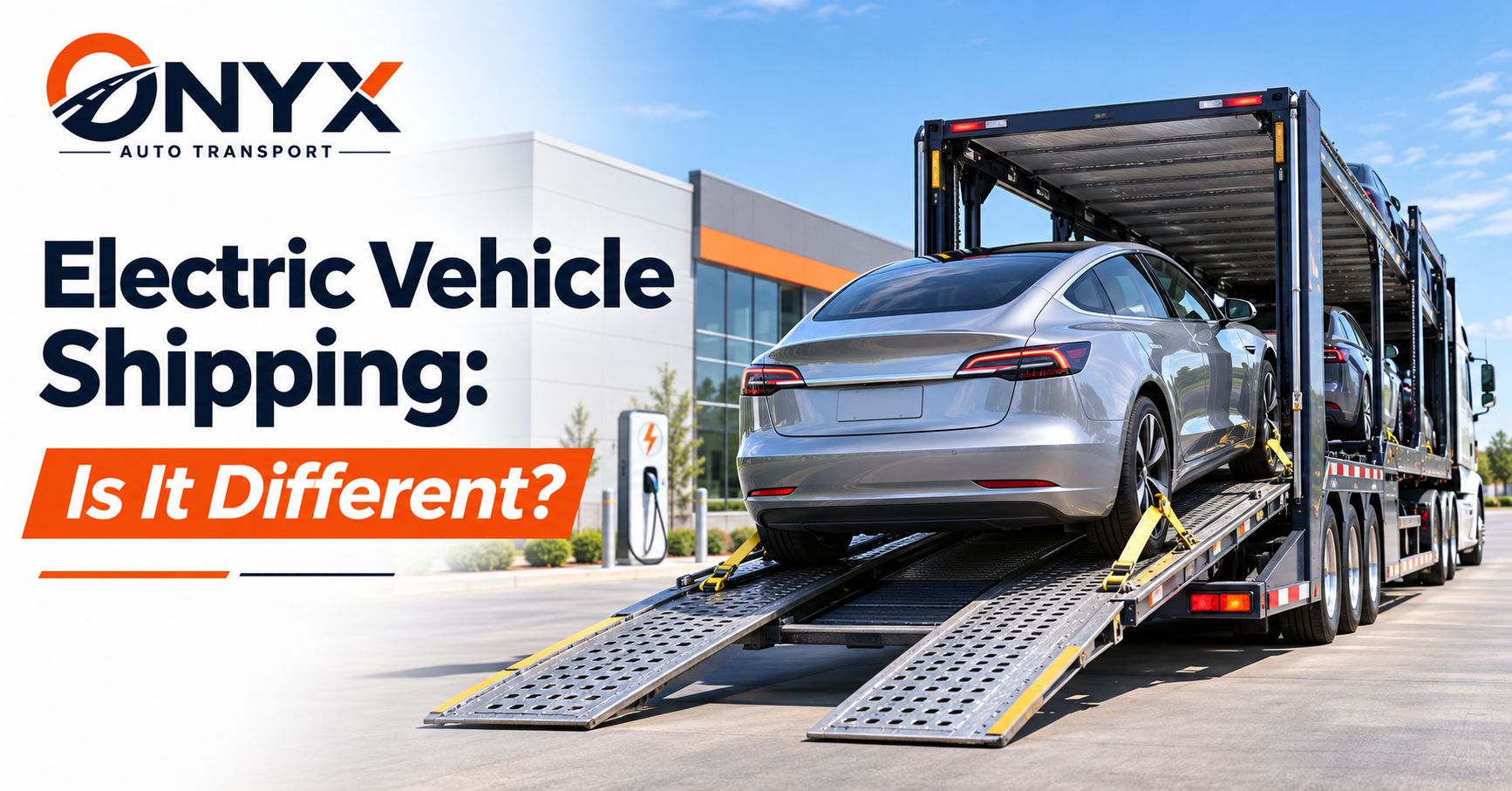

You’re relocating across the country or you’ve just purchased an EV online from a seller far away. Now you’re wondering if shipping it’s the same as shipping a petrol car. Will the battery be safe? Is it more expensive?
Here’s the short story: shipping an electric vehicle is the same as shipping a car. You get a quote , a carrier comes and picks up your car , you inspect it on delivery . But a few details shift, and knowing them helps you avoid delays and surprise fees. This guide explains what’s different about shipping an EV and how weight affects price. You’ll also learn how to prepare the battery and what to do if your EV is damaged or won’t run.
Short answer: ” Shipping an electric vehicle is like shipping a petrol car, but with four differences. EVs are usually heavier and need to be at the right charge level. They have to load with the wheels locked so the motors can’t turn. Extra care needed for damaged batteries. Most “unscathed” EVs are shipped on regular open or enclosed carriers.
How Electric Vehicle Shipping Works
The process looks almost identical to shipping any other car. Let’s break it down.
- Request a quote: Share the make, model, and whether the car runs.
- Book and get a carrier assigned: Your broker matches your EV with a licensed carrier on your route.
- Prep the car: Set the charge level, remove personal items, and take photos.
- Pickup and inspection: You and the carrier note the car’s condition on the bill of lading.
- Delivery: You inspect the car again, compare it to your photos, and sign.
The differences show up inside these steps. They affect what the carrier needs to know, how the car gets loaded, and how you prep the battery.
What Makes Shipping an EV Different?
EVs Weigh More
Battery packs are heavy. In January 2023, the chair of the National Transportation Safety Board noted that several EVs weigh about 33% more than their gas versions. She also said the electric Ford F-150 Lightning weighs 2,000 to 3,000 pounds more than the gas model.
Here is why that matters for shipping. A loaded car hauler can’t go over the federal limit of 80,000 pounds gross vehicle weight on the Interstate System. Heavier vehicles use up more of that limit, so a carrier may fit fewer cars on a load. Large electric trucks and SUVs feel this the most.
The Wheels Can’t Turn Freely
Many EV motors make electricity when the wheels spin. Tesla’s Cybertruck instructions for transporters warn that spinning wheels can cause damage, overheating, and in rare cases fire. The manual says to transport the truck with all four tires off the ground and to use an eight-point tie-down.
On a car carrier, your EV rides on the deck with its tires strapped in place. That’s safe when the carrier loads correctly. Just don’t let anyone tow your EV with two wheels on the road to reach a pickup spot.
Loading Takes a Few Extra Steps
Some EVs need a special mode to roll freely onto a trailer. Tesla calls it Tow Mode, and the vehicle must sense a working access card or fob to turn it on. If the 12-volt battery is dead, the touchscreen may not work, and loading gets harder. Leave the carrier a physical card or fob, and tell your broker the exact model when you book.
Battery Charge Level
You don’t want a full charge or an empty one. Onyx Auto Transport’s guide to car shipping prep steps tells EV owners to ask the carrier for separate charging instructions. As a rule of thumb, leave enough charge for loading, unloading, and a short trip to a charger after delivery. Your owner’s manual may give a more exact range. A nearly empty battery can also make loading harder if the car needs power to shift into Tow Mode.
Low Ground Clearance
Some EVs sit low, with a flat battery pack under the floor. A steep loading ramp can scrape the underbody. Mention low clearance when you book so the carrier can bring the right ramps or use a liftgate trailer.
EV vs. Gas Car Shipping: Side-by-Side
| Factor | Gas car | Electric vehicle |
| Booking process | Standard quote and carrier assignment | Same, plus model details for weight and loading |
| Weight | Lighter on average | Often heavier, which can limit cars per load |
| Fuel or charge | About a quarter tank | Partial charge per carrier and maker guidance |
| Loading | Rolled on in neutral | May need Tow Mode or a similar setting |
| Access device | Standard fob | Physical card or fob, not only a phone app |
| Damaged vehicle | Standard non-running handling | Extra caution for battery damage |
Does Electric Vehicle Shipping Cost More?
Sometimes, but not always. A small electric hatchback may cost about the same as a gas sedan on the same route. A heavy electric pickup or SUV may cost more.
Several factors can push an EV quote higher:
- Weight. A heavy EV takes up more of the carrier’s load limit.
- Size. Large electric trucks may need more deck space.
- Enclosed transport. Many owners of high-value EVs choose a covered trailer, which costs more. The Onyx Auto Transport enclosed auto transport service explains when it makes sense.
- Non-running condition. A dead EV may need a winch or extra handling.
Distance, route, and season still matter most, just as they do for gas cars. Get a quote with the exact trim, since battery size can change the weight. Own a heavy model? Book early so your broker has more time to find a carrier with room on its load.
How to Prepare Your EV for Shipping
Good prep keeps pickup quick and protects you if a problem comes up. Follow these steps:
- Set the charge level based on your carrier’s and manufacturer’s guidance.
- Check the 12-volt battery so the car can power on for loading.
- Pack the charging cable if you want it with the car, and tell the carrier.
- Leave a physical card or fob with the carrier.
- Turn off features that might wake the car, like sentry or alarm modes, so they don’t drain the battery.
- Remove personal items and toll tags.
- Photograph every side of the car, the wheels, and the charge level on the screen.
Next steps: plan your first charge before delivery day. Find a charger near the drop-off spot so you aren’t stuck with a low battery.
Shipping a Damaged or Non-Running EV
A car that won’t power on can still ship. Tell your broker right away so the carrier brings a winch and plans for loading.
Battery damage is a different story. A 2023 safety advisory from PHMSA, a U.S. DOT agency, warns that flood-damaged EV batteries can catch fire days to weeks later and may reignite. If your EV was in a flood, a crash, or a battery-related incident, share that history before you book. Some carriers may decline the shipment or require special handling.
This section shares general safety information. For a damaged EV, follow your manufacturer’s guidance and talk with a qualified service professional before transport.
Quick Recap
- EV shipping follows the same process as shipping a gas car.
- EVs are often heavier, which can affect how many cars fit on a load and your price.
- Keep the wheels secured and never tow an EV with tires on the ground.
- Set a partial charge and leave a physical card or fob for the carrier.
- Always disclose battery damage, floods, or crashes before booking.
Final Thoughts
Electric vehicle shipping isn’t hard, but it rewards a little planning. Share your exact model, set the right charge, and leave the carrier what it needs to load your car safely. Those small steps help pickup and delivery go smoothly.
Curious how it plays out in real life? Onyx Auto Transport’s customer shipping stories include a Tesla Model Y shipped from Maryland to San Francisco. When you’re ready, request a quote and mention that you’re shipping an EV. Share the exact trim and any battery history so the right carrier and equipment are lined up from the start.
Frequently Asked Questions
Can you ship an electric car on an open carrier?
Yes. Most undamaged EVs ship on open carriers, the same trailers used for gas cars. Enclosed transport is optional. Many owners choose it for high-value or low-clearance models that need extra protection from weather and road debris.
Will the carrier charge my EV during transport?
Usually not. Car carriers generally don’t plug vehicles in during transit. Your EV arrives with roughly the charge you left, minus some natural drain. Plan to charge soon after delivery, especially on long or cold-weather trips.
Can I ship a Tesla if I only use the phone app?
You’ll need a physical card or fob. The carrier won’t have your phone, and some loading steps only work when the car senses an access device. Leave a spare card with the vehicle and keep the app connected.
Does cold weather affect an EV during shipping?
Cold can lower a battery’s charge faster while the car sits. That’s not usually harmful, but it can leave you with less range at delivery. Leave a bit of extra charge for winter shipments and find a charger near drop-off.
Is shipping a hybrid different from shipping an EV?
Regular hybrids ship like gas cars, since they have a fuel tank and a smaller battery. Plug-in hybrids sit in between. Follow the carrier’s fuel guidance and keep the battery partly charged, just as you would for an EV.