
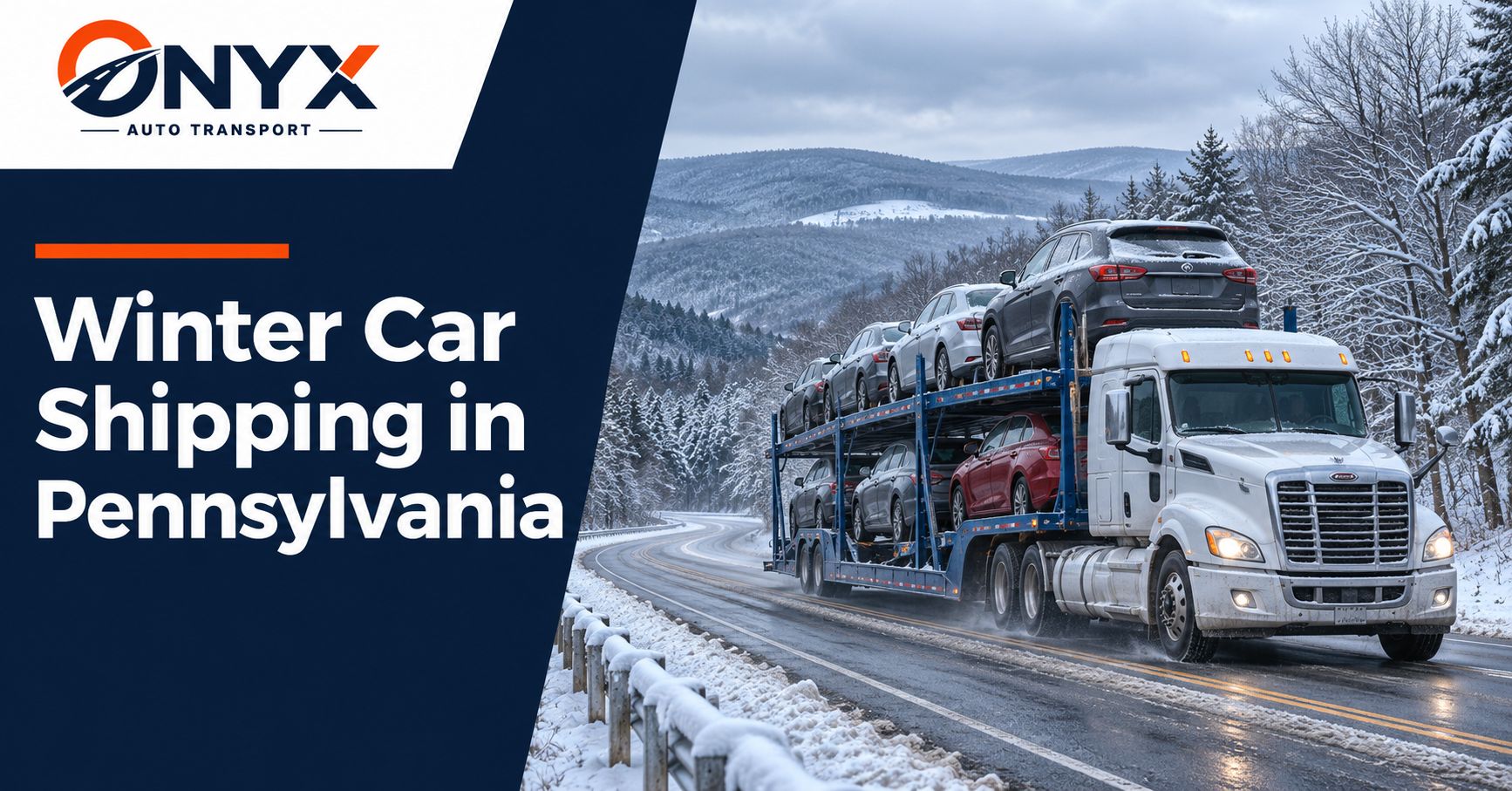

Snow is in the forecast, and your car needs to move. Maybe you’re heading south for the winter, starting a new job, or buying a car from out of state. Can a carrier still pick it up on time?
Yes, in most cases. Winter car shipping in Pennsylvania runs all season. Still, snow, ice, and state truck restrictions can shift pickup and delivery dates. Knowing how those pieces fit together helps you plan around them. This guide covers how Pennsylvania winters affect car carriers and what PennDOT’s truck restrictions mean for your shipment. You’ll also learn how to track delays and how to book and prep your car so winter weather doesn’t derail your plans.
Quick answer: Car shipping in Pennsylvania continues through winter, but storms can delay pickup and delivery. PennDOT may restrict trucks on major highways during winter events, and carriers often wait out storms for safety. Book early, keep your dates flexible, and clear snow from your car. Consider enclosed transport for salt protection, and watch 511PA for restrictions.
How Pennsylvania Winters Affect Car Shipping
Pennsylvania weather can change a lot from one end of the state to the other. A sunny day in Philadelphia can mean heavy snow near Erie or in the mountains.
Here are the trouble spots carriers watch most:
- Northwest Pennsylvania: Lake-effect snow near Erie can pile up quickly.
- Mountain routes: Parts of I-80, I-81, I-84, and the PA Turnpike cross high ground where snow and ice linger.
- Northeast Pennsylvania: The Poconos and Scranton area often see more snow than the southeast.
- Rural roads: Back roads may stay icy long after highways are plowed.
Road salt is another winter factor. It keeps highways open, but it also coats cars on open trailers with a salty film.
PennDOT’s Winter Truck Restrictions Explained
Here is why winter shipments sometimes stall even when your street looks fine. Car carriers are commercial trucks, and Pennsylvania can restrict them during storms.
PennDOT’s winter event vehicle restrictions use five tiers, with Tier 5 the most severe. The page also notes that commercial trucks may be restricted in areas that don’t appear to have bad weather. That keeps them out of worse conditions ahead or matches neighboring states’ rules.
| Tier | What PennDOT restricts | What it means for your shipment |
| Tier 1 | Tractors without trailers, and tractors pulling unloaded or lightly loaded trailers, plus a few other vehicle types | A carrier that has dropped off most of its cars may have to pause |
| Tier 2 | Tier 1 vehicles, with extra limits on tandem trailers and buses | Some carriers reroute or wait |
| Tier 3 | No commercial vehicles, except loaded single trailers with chains or approved traction devices | Only loaded carriers with chains or traction devices can keep going |
| Tier 4 | No commercial vehicles | Car carriers can’t use affected roads |
| Tier 5 | No vehicles except emergency responders | All travel stops on affected roads |
Restrictions usually apply to specific highways for a set time, then lift once roads are safe. PennDOT lifts them corridor by corridor, so one highway may reopen to trucks before another. A one-day storm can still push a pickup back a day or two. Carriers also need time to catch up on missed stops.
What Delays to Expect and How to Track Them
Most winter delays are short. A carrier may hold for a storm, wait for plows, or take a longer route around a restricted highway. Hours-of-service rules and missed connections can stretch a delay into the next day.
You can follow conditions yourself. 511PA shows PennDOT’s vehicle restrictions, road conditions, and plow locations. Check it the day before pickup and again on delivery day.
Ask your shipper how you’ll get updates. Our guide to auto transport tracking and order status explains the usual update options. It also covers what a revised delivery window means.
Booking Tips for Winter Car Shipping in Pennsylvania
Let’s break it down. These steps give you the best shot at an on-time shipment.
- Book early. Add a few extra days to your usual planning time, especially for routes crossing the mountains.
- Keep dates flexible. A wider pickup window lets the carrier work around storms.
- Plan around holidays. Thanksgiving through New Year’s brings travel crowds and fewer working days for some carriers.
- Expect snowbird demand. Late fall and early winter bring heavy demand on southbound routes, like Pennsylvania to Florida.
- Pick an easy meeting spot. Is your street steep, narrow, or unplowed? Onyx Auto Transport can arrange a nearby meeting point, like a plowed store parking lot.
- Share accurate details. Mention long driveways, hills, or private roads when you book.
Want route prices and transit estimates? See the Onyx Auto Transport Pennsylvania car shipping services page for popular routes to and from the state.
Shipping Into vs. Out of Pennsylvania in Winter
The direction of your shipment changes what to watch for.
Shipping out of Pennsylvania: Southbound routes are busy in late fall, so book early if you’re heading to Florida or another warm state. Your car may carry Pennsylvania road salt with it. Wash it, including the underside, soon after it arrives.
Shipping into Pennsylvania: The trip may start in mild weather and end in a storm. Delivery is often the step most likely to slip. Have a backup person ready to receive the car, and keep your phone handy for updated arrival times. Make sure the delivery spot is plowed and easy for a large truck to reach.
Either way, winter car shipping in Pennsylvania goes best when you plan the hardest part of the route first: the stretch most likely to see snow.
Open vs. Enclosed Transport in a Pennsylvania Winter
Open transport is the most common and usually the most affordable choice. It works fine for everyday cars in winter. Expect some road grime and salt by the time the car arrives.
Enclosed transport keeps snow, slush, and salt spray off the car. It costs more, but it’s worth considering for classic, luxury, or freshly detailed vehicles. Our enclosed auto transport page explains which vehicles it suits best.
Prep Your Car for a Winter Pickup
Winter prep takes only a few extra minutes and helps pickup go smoothly.
- Clear all snow and ice. Pennsylvania law requires reasonable efforts to remove snow and ice from a vehicle within 24 hours after a storm. That includes the hood, trunk, and roof. Clearing it also prevents chunks from flying off the trailer.
- Wash the car if you can. A clean car makes the condition report more accurate.
- Check the battery. Cold weather is hard on weak batteries, and the carrier needs to start the car.
- Top off washer fluid with a winter blend.
- Keep about a quarter tank of fuel.
- Clear a path from the car to the street, or plan to meet the carrier elsewhere.
- Take photos in daylight, since short winter days make evening photos harder to read.
Next steps: check the forecast two or three days before pickup. If a big storm is coming, call your broker early to adjust the plan.
Quick Recap
- Winter car shipping in Pennsylvania runs all season, but storms can shift dates.
- PennDOT’s five-tier truck restrictions can pause car carriers on major highways.
- Track restrictions and road conditions on 511PA.
- Book early, keep dates flexible, and pick an easy meeting spot.
- Clear snow and ice from your car before the carrier arrives.
Final Thoughts
Pennsylvania winters don’t stop car shipping, but they do reward good planning. Leave extra time, stay flexible, and know how PennDOT’s restrictions can affect a carrier’s route. Prep your car for the cold, and track conditions as pickup day gets closer.
Onyx Auto Transport is based in Newtown, Pennsylvania, so we know how quickly a winter storm can change plans. When you’re ready, request a quote with your route and dates. We’ll help you build in the right amount of flexibility.
Frequently Asked Questions
Is winter a cheaper time to ship a car in Pennsylvania?
Sometimes. Overall demand often eases in the middle of winter, which can help prices on many routes. Southbound routes to warm states can cost more, though, since snowbirds ship cars south in late fall. Flexible dates usually help most.
Will a carrier pick up my car during a snowstorm?
Usually not. Carriers often hold off until roads are plowed and any truck restrictions lift. Your shipper should contact you with a new pickup window. Planning a flexible date range from the start makes these changes much easier to handle.
Can a car carrier reach my house if my street is snowy?
Maybe not. Large carriers need wide, clear roads and room to turn. If your street is steep, narrow, or unplowed, plan to meet the carrier at a nearby plowed lot. Tell your shipper about access issues when you book.
Should I wash road salt off my car before pickup?
It helps. A clean car makes existing scratches and dents easier to spot and record on the bill of lading. If washing isn’t possible in freezing weather, take extra photos and point out any problem areas during the pickup inspection.
What if my car arrives covered in road salt?
That’s common with open transport in winter. Salt residue isn’t damage, but wash the car soon after delivery, including the underside. Inspect it carefully, and note any new dents or scratches on the bill of lading before you sign.